Early Childhood
Our goal is to help children become capable, confident, curious, and kind. Through self-mastery, children develop the independence to think, choose, problem-solve, and care for themselves and their community.
Program Details
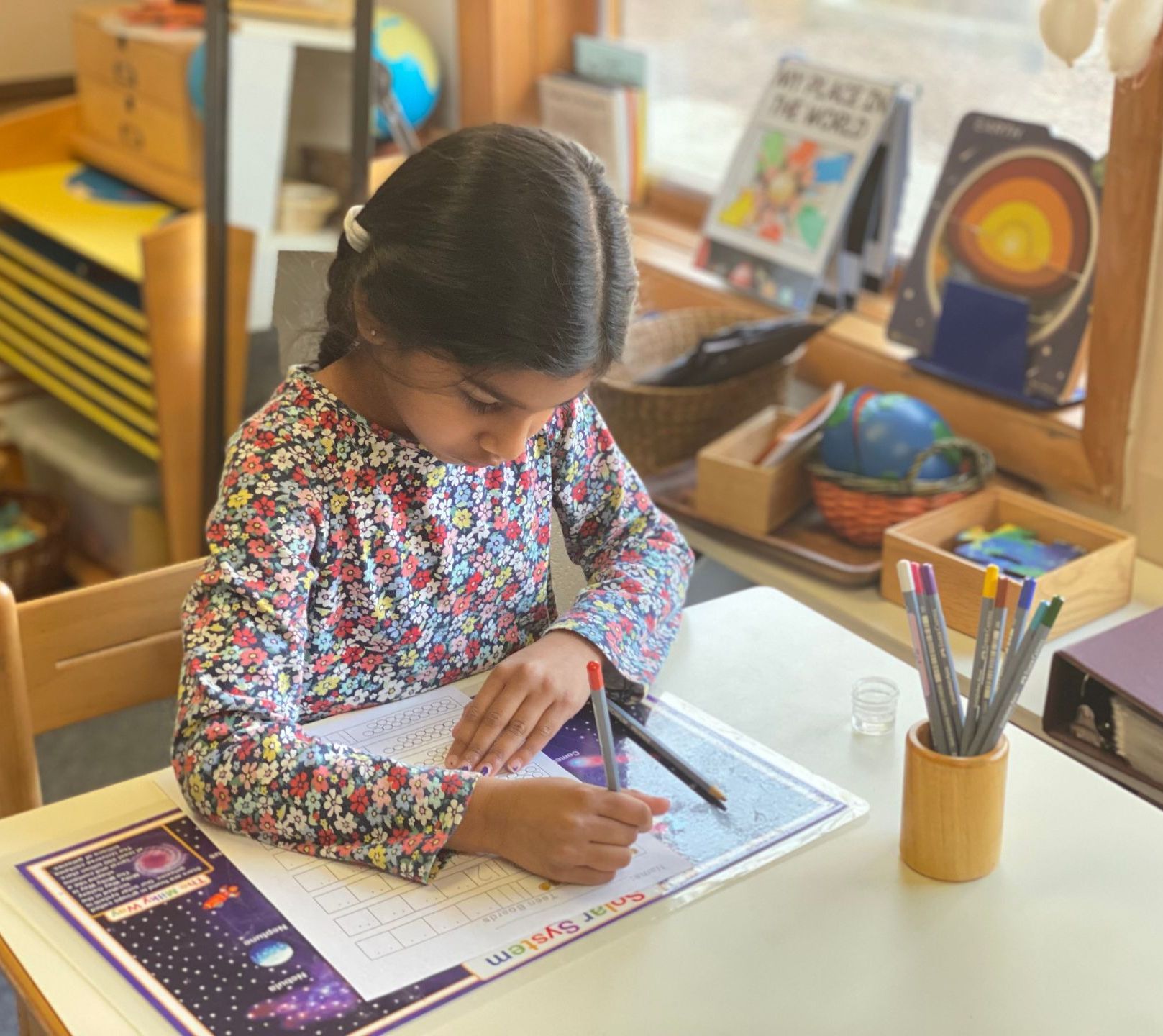
There’s a lot for children to learn in the Early Childhood years—but learning isn't just about what ends up in their heads. It’s also about building the skills and confidence to use what they know.
Through everyday Montessori work, children practice concentration, coordination, perseverance, independence, and responsibility. And perhaps best of all, they discover the pride that comes from looking at something they’ve worked hard to accomplish and thinking, “I did that!”
We focus on...
Practical Life
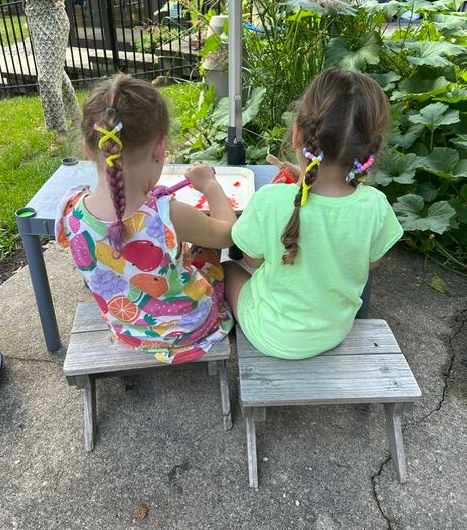
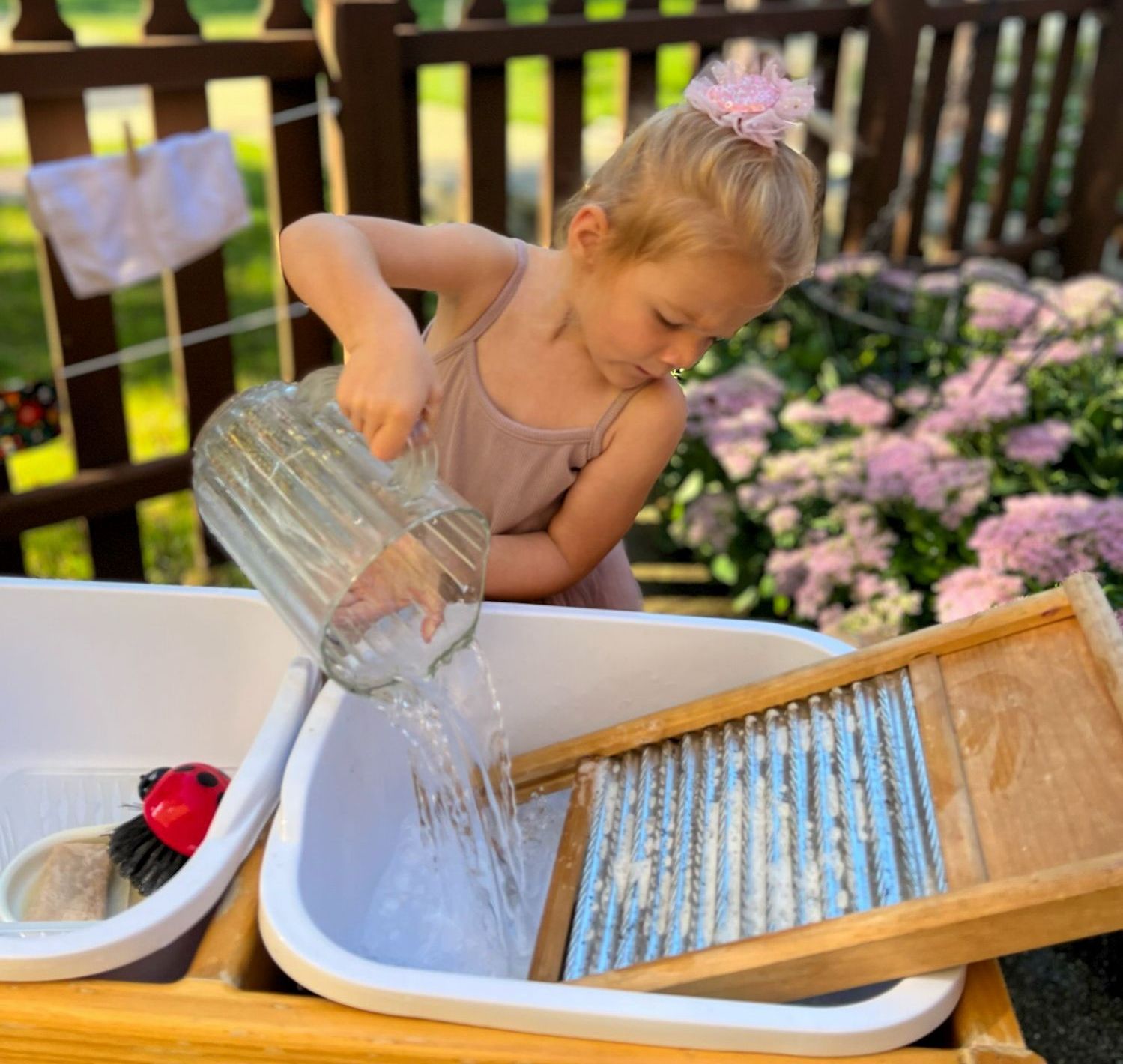
This is where “I can do it myself” really begins. Children practice everyday skills like pouring, dressing, preparing food, caring for plants, and keeping their classroom beautiful. Along the way, they’re building coordination, concentration, confidence, and the independence to take care of themselves and their community.
Sensorial
Children are naturally curious about the world around them. Montessori gives them beautiful, hands-on ways to explore it—sorting, matching, comparing, grading, listening, touching, and noticing the details that others might miss. These experiences help children make sense of their world while building the observation and thinking skills they’ll use everywhere else.
Mathematics
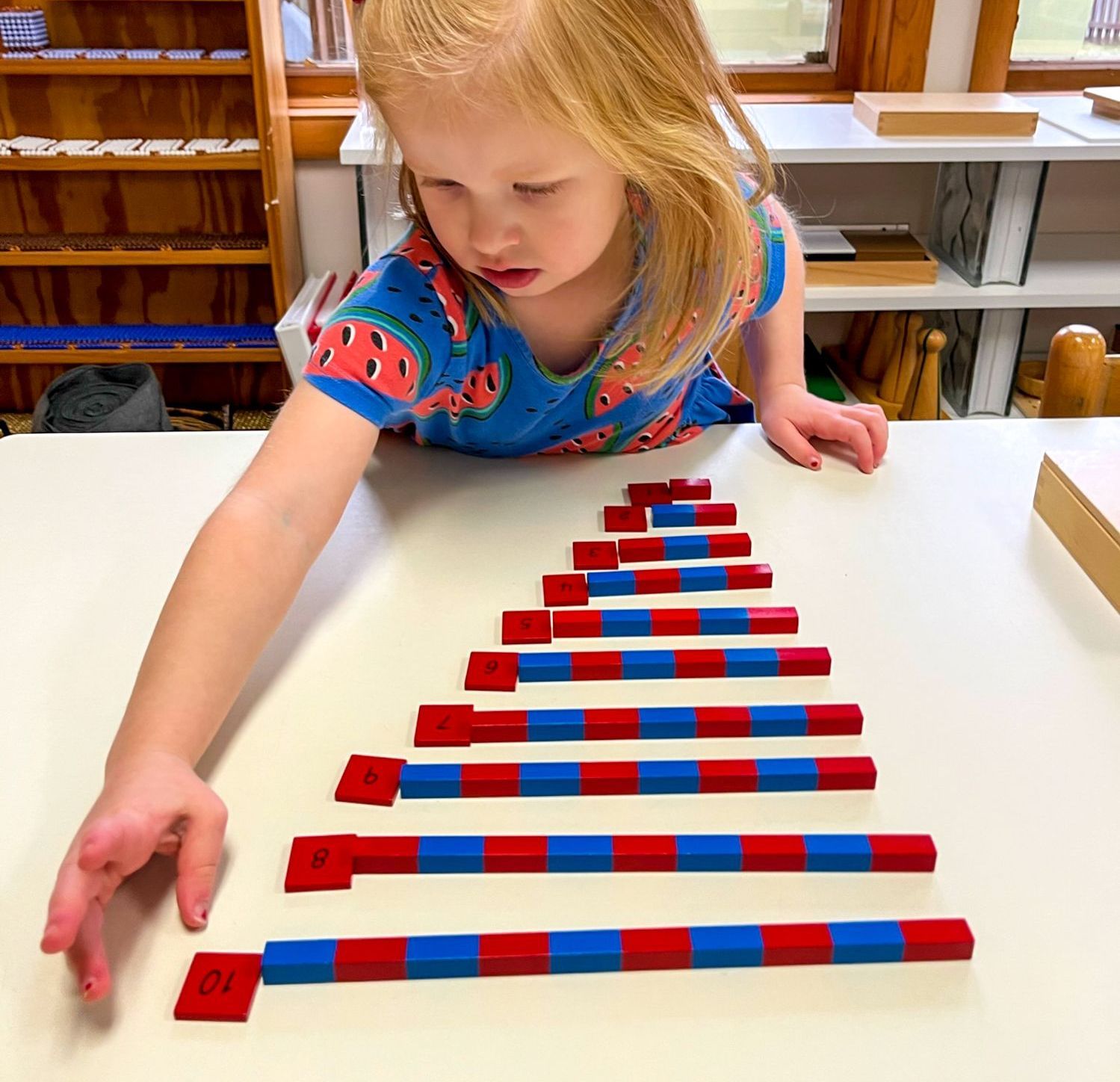
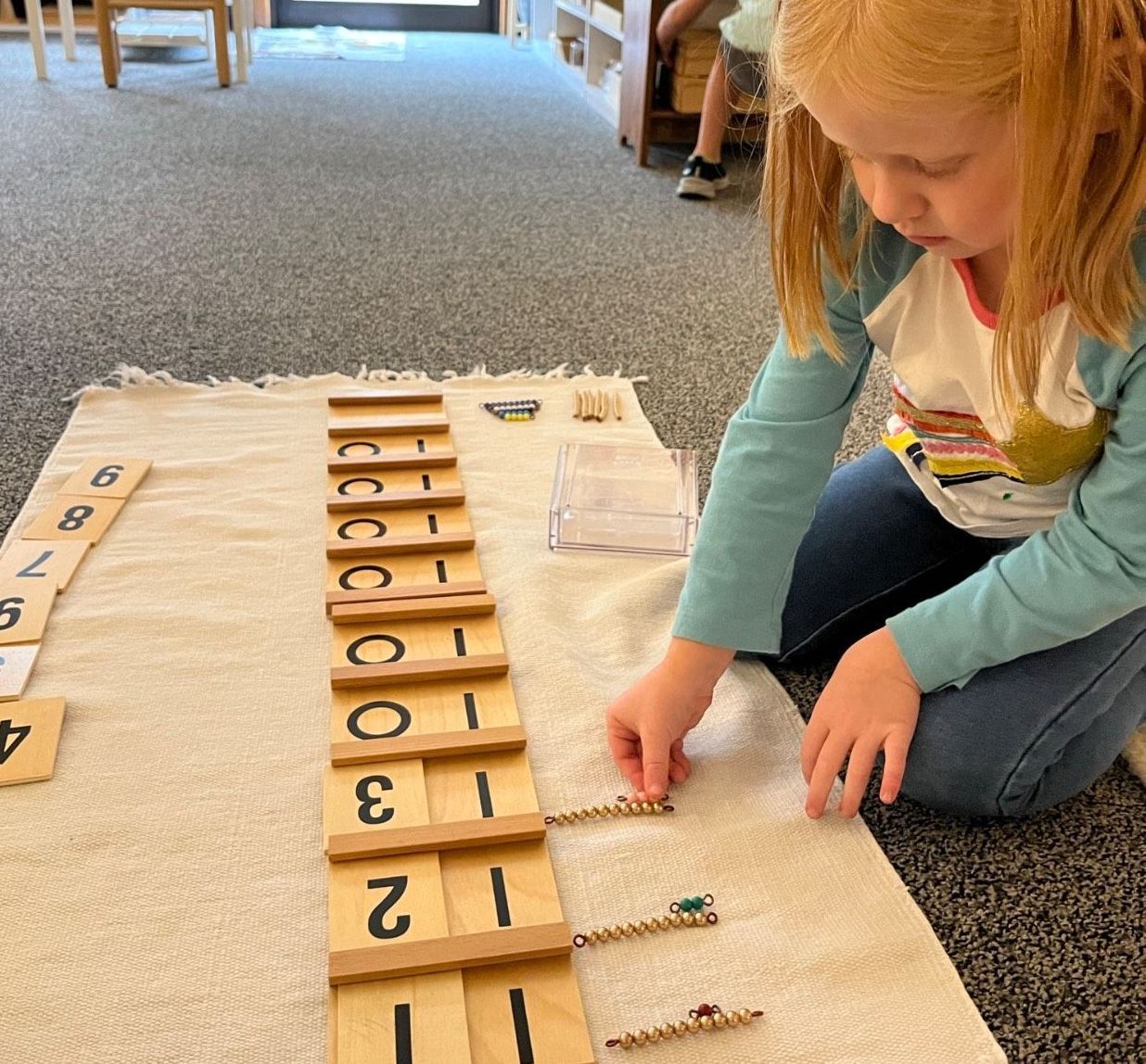
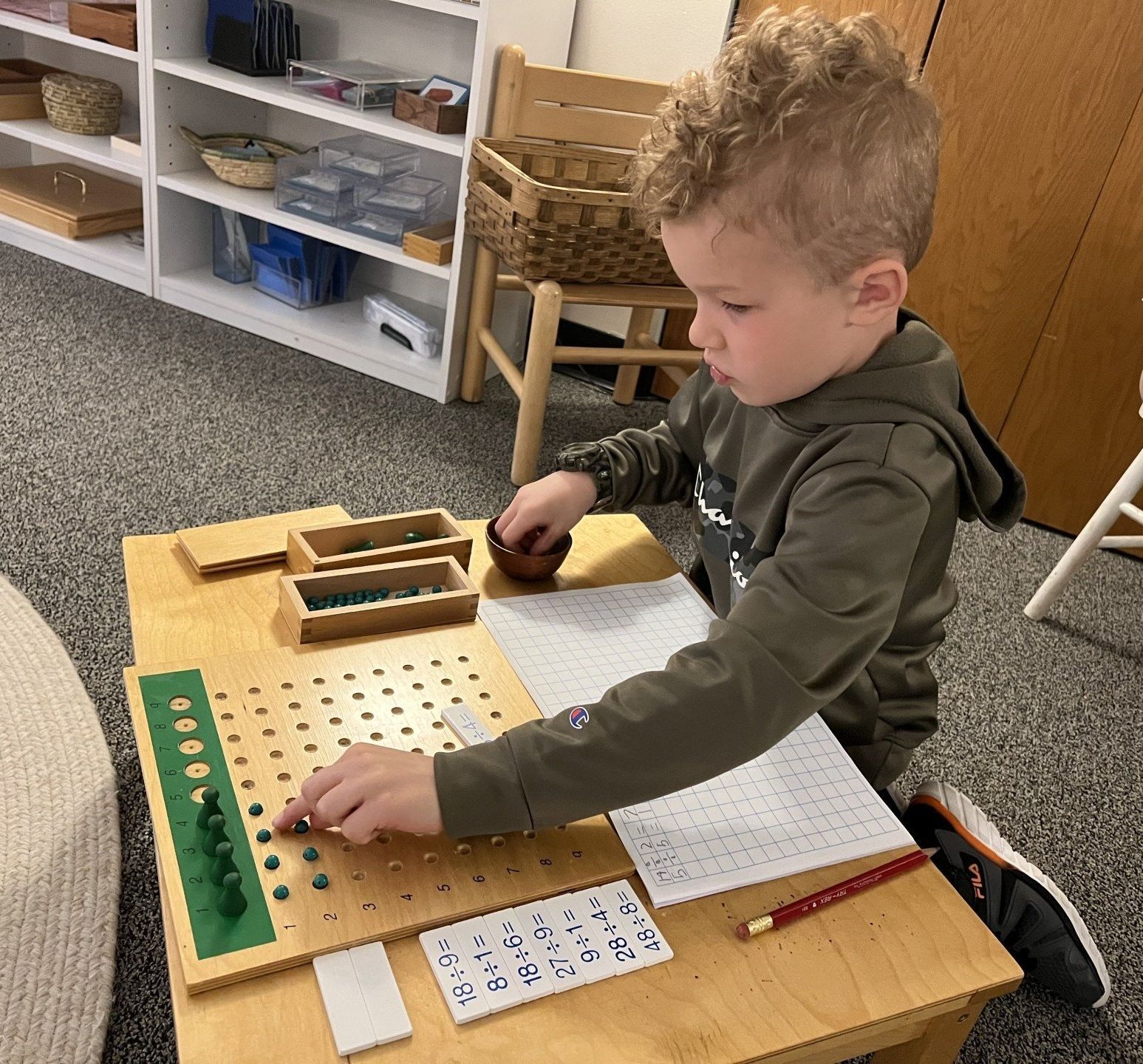
Math starts with something children can see, touch, and experience. Montessori materials help children discover quantity, number, patterns, operations, and relationships in a way that makes mathematical ideas concrete and meaningful. As their understanding grows, they move naturally from “I can show you” to “I understand why.”
Language
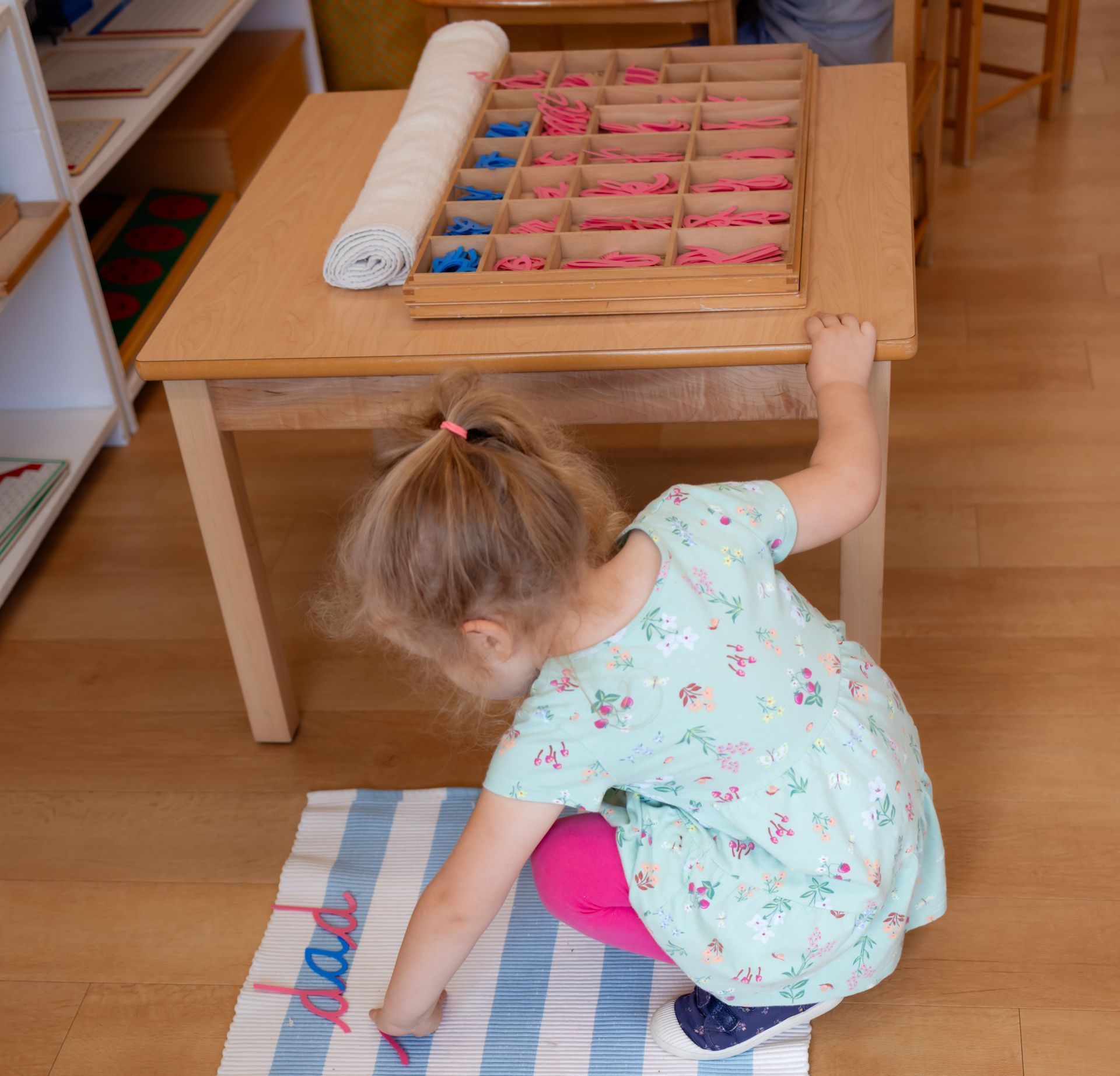
Language is woven into everything we do. Children build vocabulary through conversation, stories, songs, and experiences, then begin exploring sounds, writing, and reading through carefully sequenced Montessori materials. We want children to discover that language isn't just something to learn—it’s a way to share their ideas, understand others, and make sense of the world.
Culture
Children have big questions about the world: Where do people live? How did we get here? Why does that happen? What lives in the ocean? How are we all connected?
Culture gives children opportunities to explore those questions through geography, science, history, art, music, and nature. We follow their curiosity, build their knowledge, and help them see that they are part of something much bigger than themselves.
Teachers Who Know Your Child
Montessori teachers are trained to observe closely—to notice what sparks a child’s interest, where they’re growing, and what they might be ready to discover next. Rather than directing the whole class from the front of the room, teachers move alongside the children, offering lessons, asking questions, stepping in when needed, and giving children the space to do meaningful work on their own.
Our AMS- and AMI-trained teachers bring deep Montessori knowledge, a genuine love of children, and a commitment to knowing each child as an individual. Over the course of the three-year cycle, that relationship grows into something special: teachers know your child well enough to recognize their strengths, support their challenges, celebrate their growth, and help them take their next step with confidence.
Freedom with Responsibility
In Montessori, freedom and responsibility grow together. Children are given meaningful choices within a carefully prepared environment, and as they demonstrate that they can use that freedom responsibly, they gain more independence in their work. After a teacher introduces a lesson, a child can return to it again and again—practicing, exploring, and discovering more each time.
Learning doesn’t stop at the shelves. Children enjoy group experiences filled with stories, music, science, history, and culture. Outside, there’s time to run, dig, build, explore, and play with friends.
There is freedom to follow their curiosity, with the responsibility to care for themselves, their work, their environment, and one another.
A Children’s House
Maria Montessori called her first school Casa dei Bambini—The Children’s House. We love that name because it captures something essential about the Montessori environment: this is a place designed for children.
Our Early Childhood classrooms are bright, beautiful, and thoughtfully prepared for growing independence. Natural light, low shelves, carefully chosen materials, artwork, books, plants, and objects from the wider world invite children to look closely, wonder, explore, and make themselves at home. Every detail—from the materials within reach to the spaces for reading, creating, gardening, and working together—is designed with the child in mind.
It is a place where children can move with purpose, follow their curiosity, care for their environment, and discover a little more each day about what they are capable of.